
This could become tricky territory for India, given its basically adversarial relationship with China, its moves to block imports and investment from that country, and to deny market access for Chinese technologies, observes T N Ninan.

Finance Minister Nirmala Sitharaman on Thursday said the Indian economy is witnessing a strong recovery after a long and strict lockdown. Addressing a press conference to announce more stimulus measures to boost growth, she said macro-economic indicators are pointing towards recovery. She noted that COVID-19 active cases have declined from over 10 lakh to 4.89 lakh with case fatality rate (CFR) at 1.47 per cent.

At a time when the BJP's stars are at the top on the eve of the Lok Sabha polls, the Puri-Joshimath Sankaracharyas may have kick-started a row whose efforts might be to divide Hindus, not in the name of castes, but on what passes for greater belief, observes N Sathiya Moorthy.

New investment projects announced in the manufacturing sector declined in the three months ended June 2023. The value of new projects was lower than in the March quarter, as well as the year-ago period, shows data from project tracker the Centre for Monitoring Indian Economy (CMIE). The new project announcements worth around Rs 85,000 crore in the manufacturing segment in June were a 48 per cent decline from the Rs 1.6 trillion in March and a 66 per cent decline from the Rs 2.5 trillion seen in June 2022.

Brent crude oil prices may rise to $110 a barrel in 2023, up nearly 33 per cent from the current levels, said analysts at Morgan Stanley, in a recent note. This is, however, lower than the peak level of nearly $127 touched earlier in 2022 as geopolitical concerns took centre stage amidrising demand. "Looking ahead, Brent oil price growth will decelerate even more in the coming quarters. "This comes even as our global oil strategist expects a rise in oil prices back to $110 a barrel by the second half of 2023.

Dear patients and caregivers, be forewarned. The disease is deadly in the truest sense. Only the mildest forms seem to be curable, and those too, if detected earlier, observes Shreekant Sambrani.

In a bull-case scenario it sees the Sensex at 61,000 levels, while it's bear case scenario pegs the Sensex at 41,000 levels by December 2021.

Domestic equity investors' wealth eroded by more than Rs 4.43 lakh crore on Monday as fears of a financial contagion triggered by one of the biggest bank failures in the US roiled market sentiments. After a strong opening, Indian stocks went into a tailspin with the benchmark 30-share BSE Sensex tumbling nearly 900 points to close at 58,237.85 points -- sliding for the third straight trading session. The NSE Nifty too declined 258.60 points to end at 17,154.30 points.

Major Indian businesses and temples issued a joint statement opposing the proposed California Caste Bill SB 403.

The Income Tax authorities have left the offices of the BBC in New Delhi and Mumbai after three days of lengthy questioning of some of its staff, the United Kingdom-headquartered public broadcaster said on Thursday.

Union minister Smriti Irani reacted furiously to the Congress leader's barb at the prime minister over the Rafale purchase and the tense situation in Manipur.

The ever-astute Ravi Matthai, Director of Indian Institute of Management, Ahmedabad in 1971, offered me a basic salary of Rs 1,000 per month on my return from the United States. I doubt if IIMA could hire a faculty member at Rs 55,000 per month today! points out Dr Shreekant Sambrani.

I suggest we build a Vigyan Mandir (Temple of Science) with the ambience of a place of worship, so that it becomes a destination for pilgrims. We should embed on its walls bronze plaques describing each scientist mentioned here along with about a dozen of our ancient mathematicians, recommends Professor Kalyan Singhal, historian of science and technology.

'In the last five-six years, at least we could witness some growth, but now that assurance is also gone,' Banerjee told a news channel from the US.

Difficulties in containing the virus, an anaemic policy response, and underlying vulnerabilities, especially across the financial sector, are leading us to expect growth to fall by 5 per cent this fiscal year before rebounding in 2021, S&P said in a report.

With the 2024 Lok Sabha elections less than eight months away, the SP is experimenting with yet another template of combining a soft Hindutva tenor with its time-tested Muslim-Yadav combination to reclaim its lost political capital vis-a-vis the BJP.


Calling RBI Governor Raghuram Rajan's exit a 'bad omen' for the Indian economy, eminent economists and former policymakers on Sunday said it will be seen by the world as India's non-approval to a policy against inflation and bad loans.
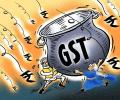
GST collection grew by 12 per cent in April to Rs 1.87 lakh crore, the highest monthly mop-up since the rollout of the indirect tax regime. The gross GST revenue collected in the month of April 2023 is Rs 1,87,035 crore of which CGST is Rs 38,440 crore, SGST is Rs 47,412 crore, IGST is Rs 89,158 crore (including Rs 34,972 crore collected on import of goods) and cess is Rs 12,025 crore, the finance ministry said in a statement. The previous high collection of Rs 1.68 lakh crore was in April last year.

Global rating agency S&P on Tuesday said even though the US and the Euro zone are headed to recession, India is unlikely to face the impact given the "not so coupled" nature of its economy with the global economy. "Indian economy is a lot decoupled from the global economy than we normally think of, given its large domestic demand, even though you (India) are a net importer of energy. "But you have enough forex reserves on one hand and your companies have managed to maintain healthy balance sheets," Paul F Gruenwald, S&P global chief economist and managing director, told reporters in Mumbai.

Elevated food price-led inflation could become a sore point for markets, which they seem to be ignoring at current levels, observe analysts. Retail inflation in India - as measured by the Consumer Price Index (CPI) - came in at a three-month high of 6.52 per cent in January 2023, compared with 5.72 per cent in December and 5.88 per cent in November 2022. The inflation print for February, according to Madan Sabnavis, chief economist at Bank of Baroda, will be critical for the Reserve Bank of India's monetary policy committee.

'Revision of the base year for both CPI and GDP are long overdue.' 'The basic data that went into the 2011-2012 series were mainly from surveys done in 2011 or earlier.' 'We have since seen the emergence of new sectors like platform-based work and online marketing.' 'The employment surveys and the consumption surveys need to reflect these adequately.'

Seattle has become the first US city to outlaw caste discrimination after its local council passed a resolution, moved by an Indian-American politician and economist, to add caste to its non-discrimination policy.

India is one of the few countries in the region that enjoys good relations with both Israel and Saudi Arabia, and IMEC would allow it to recreate the old Spice Route to Europe. All this is in jeopardy now, notes Rajeev Srinivasan.

Foreign currency loans raised by Indian companies nosedived to $210 million in the September quarter (Q2), 93.3 per cent less than the year-ago period when five firms raised $3.1 billion. The Q2 amount is the lowest since December 2003 quarter when India Inc raised $191 million. Companies cited volatility in the currency markets, sharp rise in interest rates in the United States, and fund availability in India as the main reasons behind the sharp fall.

Haven't they heard about the 'Tale of Two Brothers'? asks Suveen Sinha.
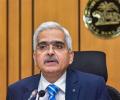
The RBI raked in a massive net income gain from foreign exchange currency sales as a buffer for the rupee during tumultuous geopolitical upheavals last year owing to Russia's invasion of Ukraine.

'Being one of the 150 million upper middle class consumers, I can vouch that the average expenses on white goods or clothing are minimal. Indians are not consumerist by nature,' says Colonel Anil A Athale (retd).

A depreciating rupee, which briefly hit 80 to the dollar on Tuesday, may boost India's exports but price-inelastic imports of crude oil and gold would mean limited relief on the trade deficit, which clocked a record $26.2 billion in June. Due to global risk aversion on the back of geo-political tensions and aggressive policy tightening by the Fed, the dollar has appreciated against most currencies, including the rupee. And, with other currencies depreciating, India's comparative advantage in this respect may be limited.

India's exports may have touched an all-time high of $422 billion in 2021-22 but recession in key western markets and geo-political crisis due to the Russia-Ukraine war are expected to impact the growth of the country's outbound shipments in 2023. All the global trade promoting factors like political stability, movement of goods, adequate availability of containers and shipping lines, demand, stable currency and smooth banking systems are in disarray. Adding to the woes, COVID cases have again started rising in countries like China, Japan, South Korea and the US.

Acharya emphasised that the time is "really ripe" for land, labour and agricultural reforms in India.

'There are occasions when the prices of individual items like food raise inflation; then supply-side measures must be taken.' 'But if there is continued inflation, it means liquidity is aggravating the situation.'

'An era of fiscal pessimism is setting in, which, if not countered intellectually, is going to have the same effect as export pessimism has had,' notes T C A Srinivasa Raghavan.

Biden, 'plotting an ambitious presidency that would begin amid twin health and economic crises, is leaning on veteran advisers with high-level governmental experience rather than outsiders and ideological rivals to help guide him on subjects including the coronavirus pandemic and the country's diminished standing in the world', a report in The New York Times said.

Prime Minister Modi took over power in mid-May with high expectations that it would strengthen India's fragile macro economy and faltering investment and growth.

A bill seeking to explicitly ban caste discrimination has been introduced in the California Senate by a Democratic lawmaker, which, if passed, could make America's most populous state also the country's first to outlaw caste-based bias.

'The market will focus on the fact that India does have strong earnings growth this year.'

That win gave us something no other victory ever would: It gave a young nation hope. It gave us the will to dream, notes Abhishek Mande Bhot.

The finance ministry on Thursday raised concerns over the possible impact of El Nio conditions on India this year, saying if recent forecasts came true, the country could see lower agricultural output and higher inflation. "Some meteorological agencies predict the return of El Nio conditions in India this year. "If these predictions are accurate, then monsoon rains could be deficient, leading to lower agricultural output and higher prices," the ministry said in its monthly economic review.
